
COPPER SCRAP · RECOVERY-LED TESTING
Millberry copper wire scrap for industrial buyers
Detailed B2B copper wire scrap supply for qualified recyclers, smelters and industrial consumers. Every offer defines wire form, surface condition, alloy status, foreign material, metallic content, net weight, packing and recovery basis for the identified lot.
For recyclers, smelters, cable processors and industrial consumers
AT A GLANCE
What does Souq Ore supply as copper wire scrap?
Detailed B2B copper wire scrap supply for qualified recyclers, smelters and industrial consumers. Every offer defines wire form, surface condition, alloy status, foreign material, metallic content, net weight, packing and recovery basis for the identified lot.
| Origin | Tanzania and Kenya |
|---|---|
| Buyer profile | For recyclers, smelters, cable processors and industrial consumers |
| Tests and checks | Product / proposed grade · Wire form & diameter · Surface & alloy condition · Foreign material · Copper & trace chemistry · Gross, tare & net weight · Packing & load unit · Recovery / deduction |
| Lot documents | 6 document types per lot, released after KYC |
| Delivery gateways | KWI · MCT · BAH · DOH · RUH · JED · DXB · AMM · JFK · LAX · BKK · PVG · PEK · HKG · NRT · HND · TPE |
| Commercial basis | Lot-specific, under signed contract after KYC and due diligence |
TECHNICAL CONTEXT
Clean wire is visible. Recoverable copper must be proven.
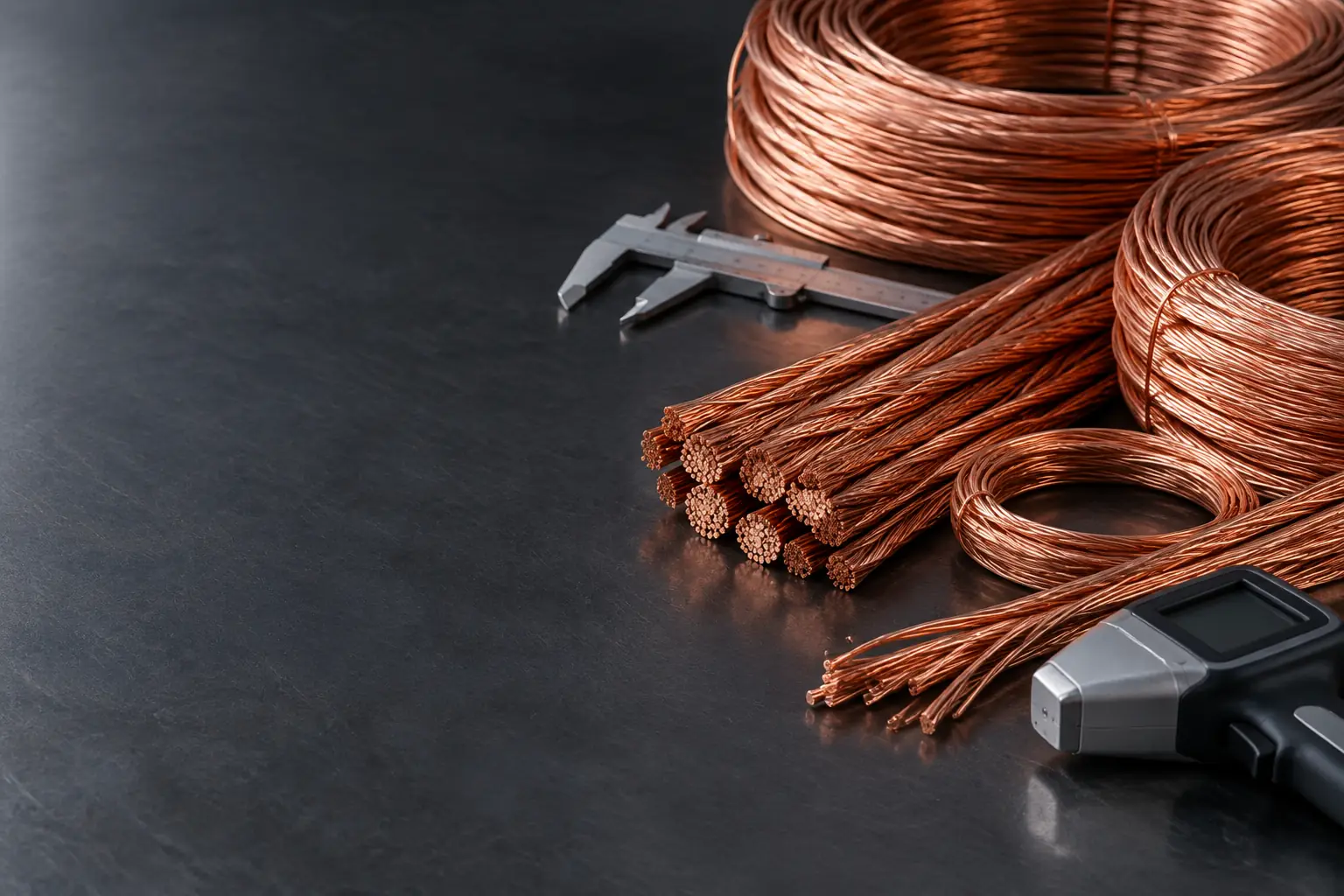
Millberry or bare-bright wire is commonly understood as clean, bare, uncoated and unalloyed copper wire prepared without burning. The offered material must be checked for insulation, solder, tinning, plugs, terminals, oils, moisture, ferrous pieces and other attachments before that description can support a purchase decision.
Commercial value follows the accepted net copper recovered from the actual lot. Souq Ore therefore records wire form and diameter range, verifies gross, tare and net weight, documents packaging, applies representative inspection and uses buyer-agreed chemical analysis or trial processing where required. No website photograph or generic 99.99% label replaces a lot-specific result.
SPECIFICATION FRAMEWORK
What is measured. How it is tested. What governs acceptance.
| Parameter | Test / inspection method | Acceptance basis |
|---|---|---|
| Product / proposed grade | Visual classification against the purchase specification and agreed recycling-industry nomenclature | Bare-bright or Millberry description assigned only after lot inspection |
| Wire form & diameter | Representative gauge measurement; record strands, coils, bundles and cut lengths | Actual diameter range and form declared on the lot specification sheet |
| Surface & alloy condition | Representative visual inspection with coating and attachment checks | Bare, uncoated, unalloyed and unburnt where offered as Millberry |
| Foreign material | Representative opening and sort; magnet, moisture or separation checks where agreed | Insulation, ferrous metal, aluminium, plastics, solder, oil, dirt and attachments reported per lot |
| Copper & trace chemistry | Representative sampling and laboratory analysis by the buyer-agreed method | Cu and agreed limits for elements such as Bi, Sb, As, Fe, Ni, Pb, Sn, S, O, Zn and P stated on the lot report |
| Gross, tare & net weight | Calibrated scale or weighbridge tickets with tare and loading reconciliation | Origin and destination weight tolerance written into the contract |
| Packing & load unit | Count and weigh bundles, coils, bags, pallets or loose-loaded units; photograph loading | Package type, unit weight, moisture protection and container plan agreed per shipment |
| Recovery / deduction | Mass balance, melt yield or trial processing where contracted | Payable recovery, contaminants, deductions and tolerances agreed before shipment |
GRADE GUIDE
Millberry Copper Scrap Guide: ISRI Barley Bare Bright Wire
Everything a procurement team needs to verify before buying Millberry copper wire from Kenyan and Tanzanian exporters.
Millberry is the trade name for ISRI Barley — bare bright copper wire, uncoated, untinned, free of insulation and free of attached fittings. It is the highest-grade copper scrap stream traded internationally and remelts directly into cathode-quality copper with minimal yield loss.
Because the LME discount is small (typically 2–4%), even minor specification breaches translate into outsized financial impact. This guide explains what genuine Millberry looks like, what inspections to insist on, and how the Kenyan and Tanzanian supply chain delivers it to Asian and Middle Eastern smelters.
Quick Reference
| ISRI Code | Barley |
|---|---|
| HS Code | 7404.00.10 |
| Loading port | Dar es Salaam Port, Mombasa Port |
| MOQ | 1 × 20GP container |
| Payment | Wire Transfer |
| Price | $4,500/Ton |
1. The ISRI Barley Definition
ISRI defines Barley as 'bare, uncoated, unalloyed copper wire, not smaller than No. 16 B&S wire gauge, free of burnt wire which is brittle.' In practice this means clean wire of 1.6 mm diameter or greater, with no green corrosion, no tin coating and no insulation residue.
Wire below 1.6 mm or that includes very fine telecom wire is classified as Berry, not Barley, and trades at a small discount even though both look similar.
2. How Kenyan and Tanzanian Millberry Are Generated
Most Millberry in Kenyan and Tanzanian are produced by mechanical wire chopping plants that strip insulation from end-of-life cable and recover bare copper. The cleanest output comes from single-source feedstock (e.g. one specific cable type from a known utility) processed on modern cable granulators with optical and density sorting.
Lower-quality Millberry can also be assembled by hand-stripping smaller volumes at scrap yards, but the quantity is rarely enough for export-scale lots.
3. Packaging and Container Fill
Millberry is shipped in jumbo big-bags (1,000 kg each), in steel drums or bundled. A 20GP container typically carries 22–24 MT, while a 40HC carries 25–27 MT before reaching the cargo weight cap.
Because copper is dense and heavy, container weight always limits the load before volume does. There is no economic case for under-stuffed Millberry containers.
4. Yield and Why It Matters
Genuine Millberry delivers 97–99% metallic yield. Losses are limited to small surface oxidation and minute insulation traces missed by the granulator. Smelters and refineries pay near-LME because this material can go directly into the converter or anode furnace without significant pre-treatment.
Material falsely sold as Millberry but containing 5% Birch-Cliff or insulation residue immediately drops yield to 92–94%, which destroys the buyer's margin.
5. Inspection: Don't Skip This
SGS or Bureau Veritas pre-shipment inspection is standard. The inspector checks: average wire diameter, uniformity, absence of tinning, absence of green oxidation, absence of insulation flakes, and a sample melt to confirm copper purity above 99%.
For large contracts a customer's own QC representative may attend loading. We welcome this — clean Millberry has nothing to hide.
6. Pricing Logic for Millberry
Millberry is quoted at 96–98% of LME copper cash settlement, CIF Asian or Middle Eastern port, in USD. The LME reference is usually the cash settlement on the booking day or an agreed average around the bill of lading date.
A quote significantly below 96% LME signals either a different grade or a financially distressed seller — both are reasons for additional due diligence.
7. Active Destination Markets in 2026
Indian copper rod plants, Chinese refineries (through approved import licences), Vietnamese smelters and Turkish brass-and-rod manufacturers are the largest 2026 buyers of Kenyan and Tanzanian Millberry. Each market has slightly different documentation and inspection requirements, which we manage on the buyer's behalf.
Millberry / ISRI Barley specification (typical Kenyan and Tanzanian export quality)
| ISRI Code | Barley |
|---|---|
| Copper purity | ≥ 99.0% |
| Wire diameter | ≥ 1.6 mm (No. 16 B&S) |
| Coating | None (no tin, no insulation) |
| Oxidation | Minimal surface oxide only |
| Packaging | Big-bags 1 MT, drums or bundles |
| 20GP container fill | 22 – 24 MT |
| 40HC container fill | 25 – 27 MT |
| Metallic yield | 97 – 99% |
| LME pricing band | 96 – 98% of LME Cu Grade A |
Frequently Asked Questions
- Is Millberry the same as 'Cu-ETP wire scrap'?
- No. Cu-ETP identifies an electrolytic tough-pitch copper grade, while Millberry or ISRI Barley identifies a scrap classification based on wire size, cleanliness and condition. A Millberry lot may originate from Cu-ETP cable, but the finished scrap must still pass the agreed inspection and assay requirements.
- Can I get Millberry without insulation residue at all?
- The target specification is bare, uncoated wire with no visible insulation residue. Absolute zero contamination can only be confirmed against an agreed sampling and inspection protocol. Each shipment should define the acceptable tolerance, rejection threshold and remedy before loading.
- What is the typical lead time from order to vessel loading?
- Lead time is confirmed for each transaction after volume, inspection scope, packing, payment clearance and vessel availability are agreed. The shipment schedule is issued with the commercial offer; no loading date is treated as firm until the required documents and funds have cleared.
- Do you supply Millberry chops or only long wire?
- Supply can include chopped bare-bright wire or longer stripped wire, subject to the available lot and the buyer's purchase specification. The offer states the form, wire-size range, packing method, weight and inspection basis before contract execution.
- How do you protect Millberry during ocean transit?
- Material is packed in sealed big bags, drums or secured bundles, then loaded into a dry container. Container condition, seal number, loading weight and packing are documented. Moisture controls and any additional protective measures are agreed according to the route from Dar es Salaam Port or Mombasa Port.
Ready to Discuss Your Metal Scrap Requirements?
Contact our sales team for competitive pricing, bulk orders, and customized solutions.
MOQ: 25 MT | Monthly Capacity: 20,000 MT
PRODUCT INQUIRY
Inquire about this item
Copper wire scrap
TEST CONTROL
From lot identity to buyer acceptance.
- 01
Describe
Define wire type, insulation state, attachments, packaging and proposed grade.
- 02
Inspect & sample
Open representative units, review contamination and prepare samples under the agreed protocol.
- 03
Weigh & analyse
Record net weight and determine metallic content or recovery when the contract requires it.
- 04
Accept & load
Confirm deductions and tolerances, then document container or air-cargo loading.
LOT FILE
Expected transaction records
- Lot specification sheet with wire form, diameter range and proposed grade
- Representative inspection and contamination record
- Gross, tare and net weight / weighbridge record
- Chemical analysis or recovery report where agreed
- Packing schedule, unit weights and loading evidence
- Origin and export documents issued for the shipment
Documents are released only when they exist for the identified lot and only to qualified parties through the secure channel.
DIRECT TECHNICAL ANSWERS
Buyer FAQs
Does Millberry mean 99.99% copper?
Not by name alone. Millberry describes a clean bare-wire grade in commercial usage, but copper content must be supported by representative sampling and the agreed analytical method. Any numeric purity applies only to the identified tested lot and its contractual tolerance.
What condition must Millberry copper wire meet?
The purchase specification typically calls for bare, uncoated, unalloyed and unburnt copper wire, without insulation or unacceptable attachments. The contract must define permitted surface oxidation, solder, tinning, moisture and foreign-material tolerances.
Which chemical elements can be reported?
The agreed laboratory scope may report copper together with relevant trace elements such as bismuth, antimony, arsenic, iron, nickel, lead, tin, sulphur, oxygen, zinc and phosphorus. Required limits are buyer- and lot-specific; a generic online table is not a certificate of analysis.
How do you verify shipment weight?
Scale or weighbridge records, tare weights and loading evidence are reconciled. Independent witnessing can be added as a transaction term.
How is the material packed?
Packing is not assumed from the grade name. The offer records whether material is supplied in bundles, coils, bags, pallets or loose-loaded form, together with unit weights, moisture protection, container plan and loading photographs.
What are the minimum order, capacity and trade terms?
Minimum order quantity, available monthly tonnage, origin, Incoterm, payment instrument and delivery schedule are stated in the transaction-specific offer after buyer qualification. They are not represented as permanent website guarantees.
Are contamination deductions fixed?
No. Definitions, sampling, moisture treatment, deductions and permitted tolerances must be written into the purchase contract for the specific lot.
OTHER COMMODITIES