
Copper Cathode: B2B Wholesale Export & Bulk Buying Guide
Updated
SHORT ANSWER
Copper cathode is electrolytically deposited refined copper supplied as metal sheets for industrial remelting and fabrication. Bulk buyers should verify the complete chemical grade, producer, batch, net metal weight and lawful title. Price commonly follows a dated copper benchmark plus or minus a physical premium. Request a lot-specific export and distribution proposal through Souq Ore’s corporate RFQ; availability and terms require verification before contracting.
Key takeaways
- Cathode is refined metal, not ore, concentrate, scrap or finished electrical cable.
- Full chemical compliance, exchange brand status and seller title are separate checks.
- One metric tonne is 1,000 kg; the USD 10.20/kg calculation uses hypothetical inputs only.
- Souq Ore quotes are lot-specific; public content does not guarantee stock, purity or delivery.
What is copper cathode? Refined metal, not mineral concentrate
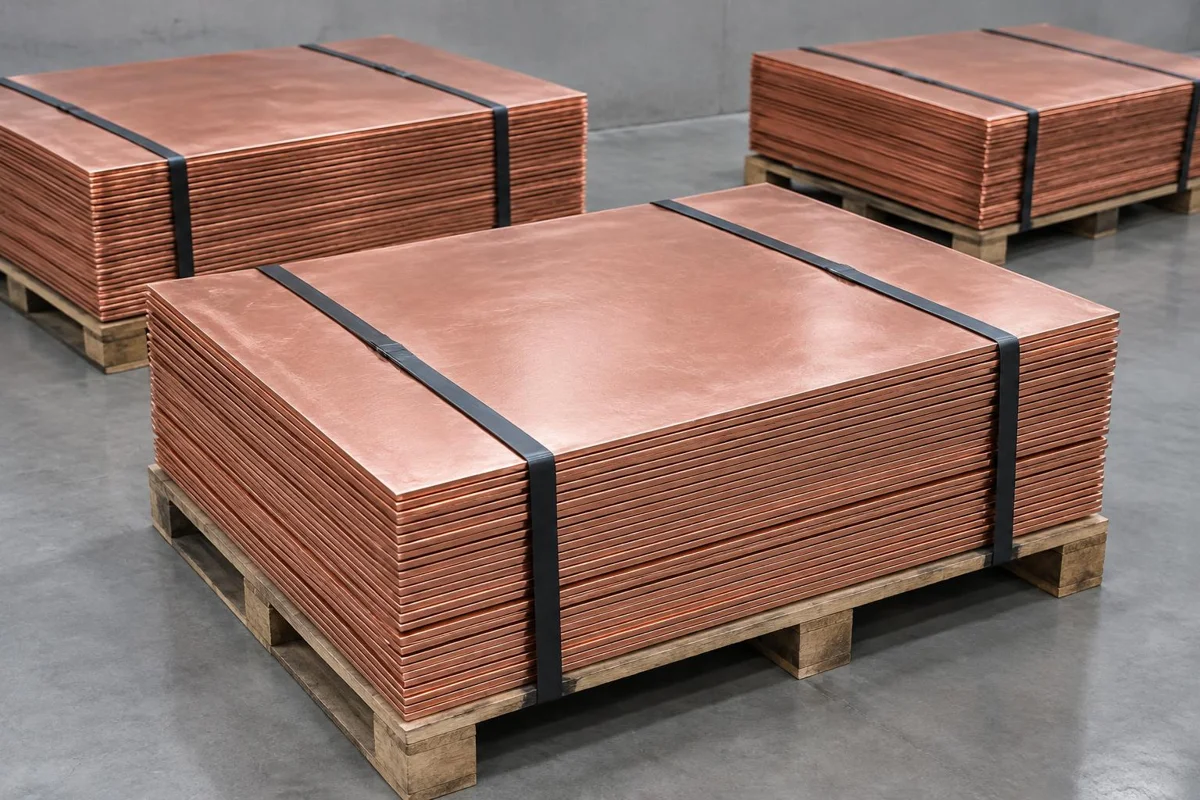
Copper cathode is refined copper deposited electrolytically and harvested as solid metal sheets for industrial remelting and fabrication. It is an intermediate metal product, distinct from mined copper ore, flotation concentrate and stripped copper wire scrap. Buyers procure a defined chemical grade, identifiable producer and measurable net metal mass, not a colour or a photograph. The word cathode identifies a product form and production stage; it does not certify a particular batch. Start a Souq Ore enquiry with the receiving factory’s written specification and intended output. The cover is an AI-generated product illustration, not a photograph of Souq Ore inventory, a named refinery or a verified shipment.
Cathode, concentrate and Millberry: compare the right product
Copper products require different acceptance tests and commercial formulas. Cathode has already passed through a metal-recovery and refining stage. Concentrate remains mineral feed requiring a compatible processor; Millberry is a scrap trade description that needs contamination and grade checks. A discount on wet concentrate cannot be compared directly with a refined-metal price. Confirm product form, accepted chemistry, producer evidence, net weight and delivery basis before comparing suppliers. Cathode chemistry also does not make a finished conductor oxygen-free or establish cable certification.
| Product | Processing role | Commercial check |
|---|---|---|
| Copper cathode | Refined metal for remelting and fabrication | Metal standard, brand, net tonnes and benchmark plus premium |
| Copper concentrate | Mineral feed for smelting or compatible processing | Dry Cu, moisture, payables, TC/RC and penalties |
| Millberry wire scrap | Recycling and remelting feedstock | Written scrap grade, coatings, contamination and metal yield |
Grade A specifications and composition: read the full standard
A copper percentage alone does not prove Grade A compliance. The LME-published BS EN 1978:2022 Cu-CATH-1 composition reference limits total listed impurities to 0.0065%, an arithmetic remainder of 99.9935% at that limit, not a separately measured copper result; individual and grouped limits also apply. ASTM B115-24 covers electrorefined and electrowon cathode. If exchange delivery is required, verify accepted standards and grades against current LME rules. The standards are not interchangeable names: the contract must identify the applicable edition, grade and complete limits. These are specification references, not assays or guarantees for a Souq Ore lot. A rounded 99.99% seller label cannot replace trace-level analytical evidence.
- Agree every required impurity, analytical method, detection limit and rejection threshold.
- Inspect sheet dimensions, surface deposits, contamination and damage against the lot specification.
- Verify producer certificates and independent reports against the same batch and complete contracted standard.
How is copper cathode produced? Two industrial routes
Electrorefining and electrowinning both produce copper cathode, but they start from different feed conditions. In a common sulphide route, ore is crushed, ground and concentrated; smelting and converting produce copper cast into anodes. Electrorefining dissolves copper from the anode and deposits purified copper at the cathode while impurities are controlled in the electrolyte and anode residues. Suitable leachable feed can follow leaching, solvent extraction and electrowinning, often called SX-EW. Electrical current deposits copper from the purified solution. Feed chemistry and plant design determine the route. Neither method automatically proves the contracted grade, and this guide does not claim Souq Ore owns a mine, smelter or refinery.
Main uses, primary applications and industrial buyers
Copper cathode supplies refined-metal feed to wire-rod mills, copper fabricators, alloy producers and qualified metal traders. Wire-rod plants melt, cast and roll copper before downstream drawing. Other processors make billets, tube, sheet, strip and copper-alloy feed. Finished copper supports power cables, motor and transformer windings, electronic connections, heat exchangers, plumbing and selected construction products. Brass and bronze manufacturers specify their own alloy chemistry. Cathode is not installed directly as an electrical wire or motor component. Each downstream application still needs the correct finished-metal grade, conductivity, mechanical properties, dimensions and applicable product certification. Buyers should match cathode acceptance to their melt practice and output specification.
Global production: mine origin is not refinery origin
Copper mining and copper refining have different geographic footprints. Chile and Peru are important Andean mining countries; the Democratic Republic of the Congo and Zambia are important in the Central African Copperbelt. China is a major refining center that processes domestic and traded feed. Refineries may use primary and secondary copper sources, while electrowinning plants recover metal from leach circuits. Mine output, refined production, reserves and exports are separate statistics. USGS contained-copper mine tonnes must not be presented as cathode cargo tonnes. Souq Ore’s Tanzania address does not establish a shipment’s mine or refinery origin. Identify feed origin where supported, refinery country, producer, brand, warehouse and export country separately in the transaction file.
How much is 1 kilogram of copper cathode worth?
Copper cathode has no permanent price per kilogram. A physical offer commonly combines a named copper benchmark with a negotiated premium or discount, expressed per metric tonne of accepted net metal. The quotation must identify cash or forward reference, pricing date or period, currency, brand and delivery term. Divide the combined USD-per-tonne amount by 1,000 to obtain USD/kg. Freight, inspection, finance, insurance, duties and taxes may be included or excluded depending on the stated basis; add only costs not already covered. This is a cathode formula, not a concentrate payability, moisture or TC/RC calculation. Souq Ore confirms an actual price only in the transaction’s written offer.
- Hypothetical benchmark: USD 10,000/tonne; hypothetical physical premium: USD 200/tonne.
- Illustrative unit price = (10,000 + 200) ÷ 1,000 = USD 10.20/kg before additional costs not included in that basis.
- Illustrative 25 net tonnes × USD 10,200/tonne = USD 255,000. This is arithmetic, not a container loading instruction, minimum order or live offer.
LME brand, laboratory report and ownership: three separate checks
Chemical conformity does not establish LME brand approval or a seller’s ownership. If exchange deliverability matters, check the exact brand and producer against the current official requirements and brand list. A genuine brand name printed on a bundle is still not proof that the offered sheets are authentic or unencumbered. Match certificates, batch references, bundle marks, warehouse records and inspection access to the actual lot. Authenticate reports with their issuers where practical and verify seller authority independently. A surface XRF screen cannot replace representative sampling and validated trace-level analysis. Contract inspection rights, sampling, retained dispute samples, acceptance limits and a claims procedure before releasing funds.
How and where to buy bulk copper cathode through Souq Ore
Start with Souq Ore’s corporate Contact and RFQ page for a lot-specific copper cathode export and distribution enquiry. Souq Ore is a Tanzania-based institutional mineral sourcing business receiving international wholesale requests. State the receiving factory, standard, acceptable producer or brand, target net tonnes, destination and timing. The trade desk can assess the requested sourcing basis; the public page does not establish current stock, monthly capacity, refinery ownership or an independently verified top-global-exporter ranking. Select an exporter through verified source, seller authority, full chemistry, net-weight evidence and enforceable terms rather than a promotional ranking. A documented trial proposal may help establish compatibility, but every later lot still needs acceptance and traceability checks.
- Provide corporate name, buyer role, intended use and receiving facility.
- Define standard and edition, impurity limits, accepted brands and inspection preference.
- State net tonnes, trial or recurring purchase, named destination and delivery window.
- Public forms are for corporate purchase intent only; arrange sensitive identity, banking and certificate exchange directly with the trade desk.
Bulk purchase evidence before payment
A defensible cathode purchase reconciles quality, quantity, title and payment conditions for one identified lot. Verify counterparty identity, beneficial ownership, lawful source and sanctions exposure through risk-based due diligence. Warehouse access and stock records should be confirmed independently, not only through a broker’s screenshots. Separate transfer of ownership from transfer of risk and documentary payment release. State remedies for chemistry failure, weight shortage, delayed shipment and document discrepancies. A payment instrument or inspection certificate alone does not eliminate commercial risk. Agree the sequence of inspection, acceptance, release and final settlement in writing before committing funds.
| Control | Evidence to reconcile |
|---|---|
| Quality | Complete standard, batch analysis, sampling plan and acceptance limits |
| Quantity | Bundle count, gross weight, pallet and strap tare, net metal and scale records |
| Title and origin | Producer, batch, lawful ownership, seller authority and applicable export evidence |
| Price and payment | Benchmark, pricing period, premium, included costs and release conditions |
| Delivery | Named place, Incoterms edition, loading plan, documents and claims procedure |
Wholesale export, packing and destination preparation
Copper cathode shipments need a weight-specific loading and receiving plan. Confirm sheet sizes, bundle weights, pallets, strapping, lifting equipment, floor-loading limits, container payload and cargo securing with the appointed parties. A metric-tonnage example is not permission to load that weight into any container. Name a suitable seaport, warehouse or receiving plant; airport codes used for broader buyer markets are not confirmed bulk-cathode routes. Specify the Incoterms edition and named place, insurance allocation, transport documents, export permissions and destination requirements for the actual shipment. Determine customs classification with the responsible parties rather than copying another cargo’s code. No page can guarantee carrier acceptance, duties or customs clearance.
Technical references and the purchase decision
This guide uses the LME Copper Grade A contract and Cu-CATH-1 composition reference, BSI BS EN 1978:2022, ASTM B115-24, Copper Development Association refining and fabrication material, and USGS Copper Statistics and Information. These sources support product, process and specification distinctions, not a Souq Ore inventory, assay, licence or exporter ranking. The price example is hypothetical and not financial advice or a binding offer. The practical decision is simple: define the correct refined-metal product, verify the producer and batch, reconcile title and net weight, and agree pricing and delivery before signing. Use Souq Ore’s corporate RFQ to discuss an evidence-led sourcing proposal, not to bypass those checks.
Questions buyers ask next
- What is copper cathode?
- Copper cathode is refined copper deposited electrolytically and supplied as sheets for remelting and fabrication. It is different from copper ore, concentrate and wire scrap. Souq Ore buyers should specify the grade and intended manufacturing use.
- How is copper cathode produced?
- Electrorefining transfers copper from anodes to cathodes through an electrolyte. Electrowinning deposits copper from a purified solution, often after leaching and solvent extraction. Both routes need process and quality controls; neither alone proves a batch’s grade.
- What does Grade A copper cathode mean?
- Check the full contracted standard. The Cu-CATH-1 reference lists total specified impurities of at most 0.0065%, an arithmetic remainder of 99.9935% at that limit, not a separately measured copper result, plus individual limits. This is a standard reference, not an assay or purity guarantee for Souq Ore stock.
- Is ASTM B115 the same as BS EN 1978 Cu-CATH-1?
- No. Specify the edition and grade rather than treating them as synonyms. ASTM B115-24 covers electrorefined and electrowon cathode. Verify any exchange-delivery requirement against current LME rules. Full composition and acceptance requirements must be checked.
- How much is 1 kg of copper cathode worth?
- Use the agreed USD-per-tonne benchmark plus the physical premium or discount, divided by 1,000. The USD 10.20/kg example assumes USD 10,000/tonne plus USD 200/tonne and excludes extra costs. It is not a live price or Souq Ore offer.
- Does copper cathode pricing use concentrate TC/RC and moisture deductions?
- Do not apply concentrate calculations automatically. Cathode is already refined metal and is commonly quoted on accepted net metal tonnes with a benchmark and premium. Concentrate dry assay, payability and moisture belong to a different product and contract.
- What is copper cathode used for?
- It is feed for wire rod, billets, tube, sheet, strip and copper alloys. Fabricated copper then serves electrical, thermal, construction and industrial uses. Finished-product standards still apply; cathode cannot be installed directly as certified cable.
- Who buys bulk copper cathode?
- Wire-rod mills, copper fabricators, alloy producers and qualified metal traders are typical buyers. Souq Ore corporate enquiries should identify the receiving operation, its specification and the buyer’s role.
- How and where can I purchase bulk copper cathode for B2B wholesale export?
- Submit a corporate RFQ through Souq Ore’s Contact page with grade, standard, accepted brand, net tonnes, destination, delivery window and inspection requirements. Verify availability, title, chemistry and signed terms before payment or freight.
- How should I evaluate a top global copper cathode exporter and distributor?
- Prioritize verifiable producer evidence, authority to sell, full chemical compliance, net-weight records and enforceable delivery terms. Souq Ore welcomes documented international sourcing enquiries; no independently verified top-global-exporter ranking is claimed here.
- Is every Grade A copper cathode LME approved?
- No. Chemical conformity, approved-brand status and seller ownership are separate. Verify the exact producer and brand against current official rules when exchange deliverability is required; a label or certificate alone does not prove it.
- Which documents should a bulk cathode buyer request?
- Agree producer and batch records, authentic analysis, inspection where commissioned, net-weight and packing records, title evidence and applicable export and transport documents. Documents are transaction-specific and released only when they exist for the identified lot.
- What are the minimum order and bundle weights?
- They depend on the verified producer, lot, packing and contract. Souq Ore does not promise a universal minimum order, fixed bundle size or monthly capacity. Request those details in the written sourcing proposal.
- Is mine origin the same as cathode refinery origin?
- Not necessarily. Refineries can process traded or secondary feed outside its original mining country. Distinguish feed origin, refinery, producer brand, warehouse and export country using actual custody and production records.
- Can Souq Ore guarantee cathode delivery or customs clearance?
- Public content makes no such guarantee. Destination, shipment mode, carrier acceptance, applicable documents, duties, risk allocation and delivery conditions must be reviewed for the identified transaction and recorded in the signed contract.